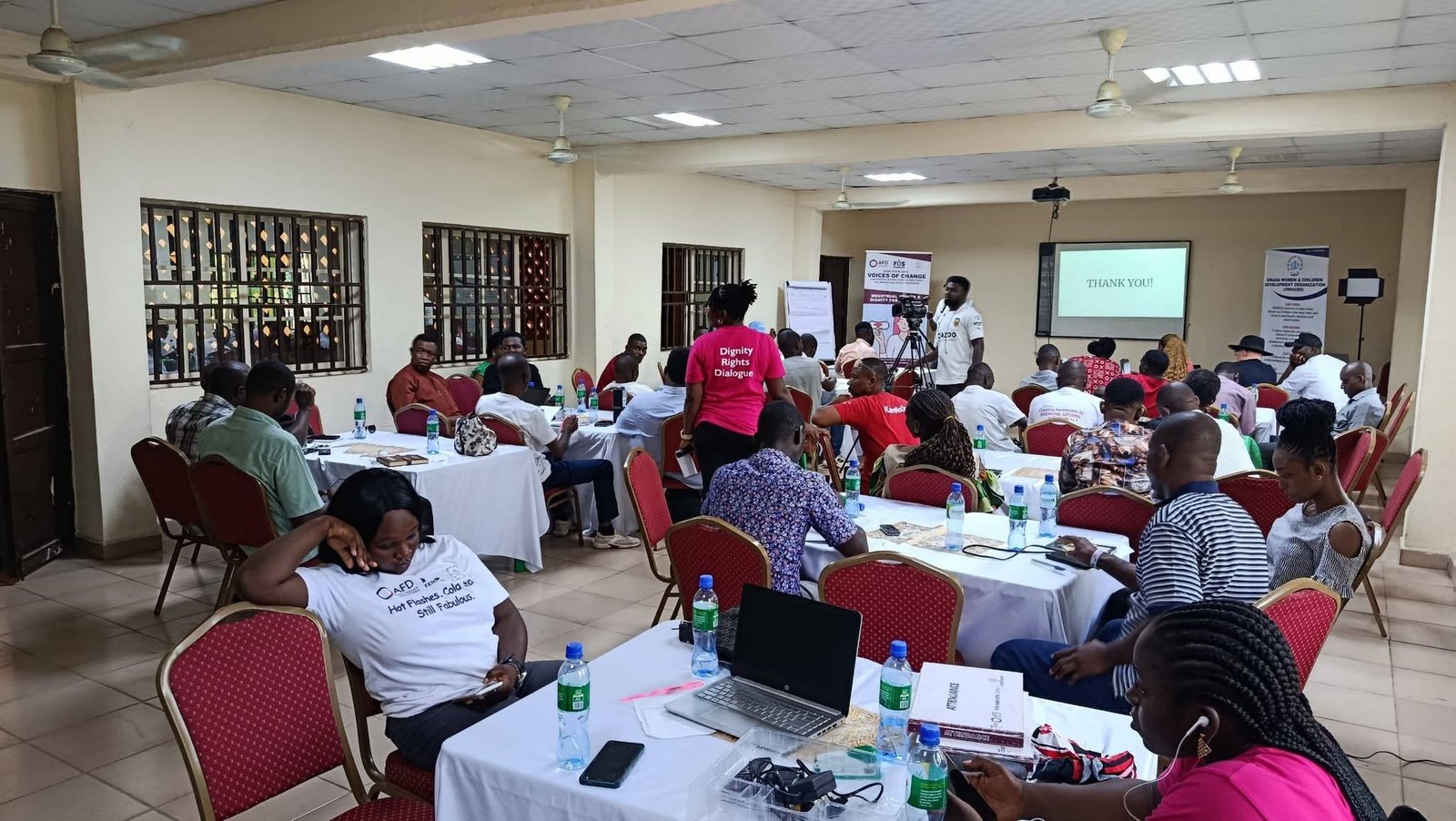
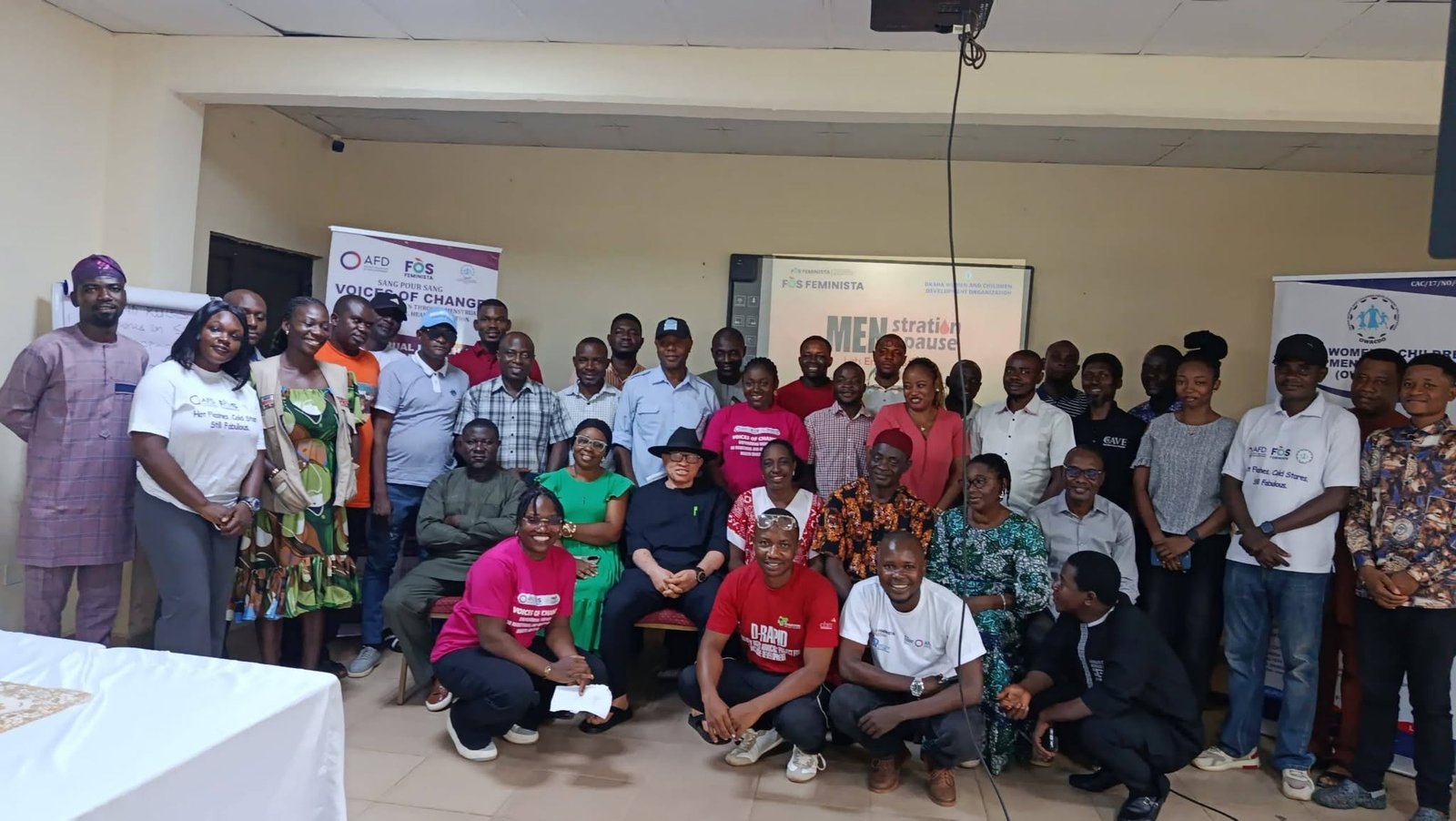
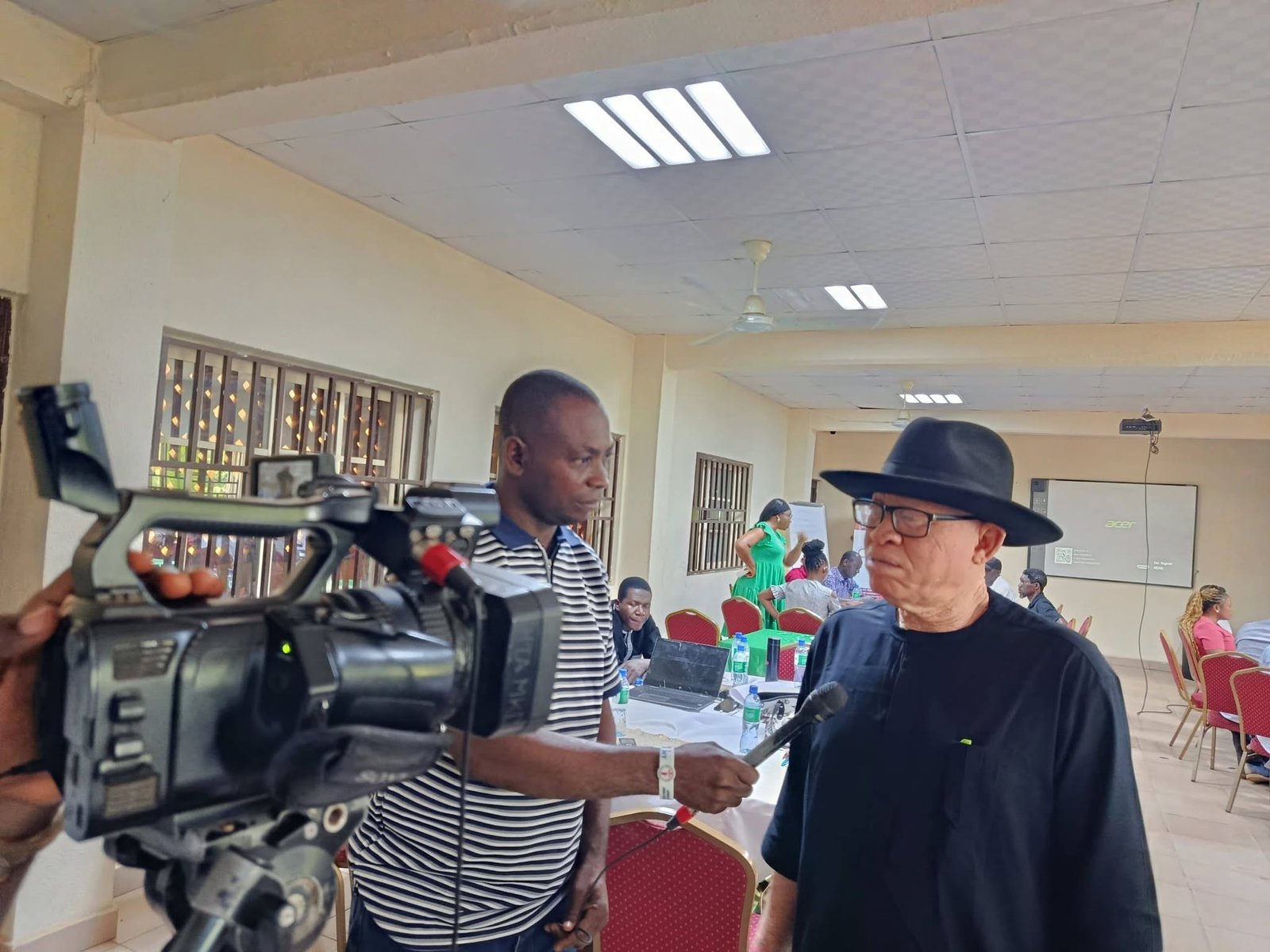
Menstrual and menopausal health remain silent, stigmatized issues in many communities, with women and girls with disabilities facing double barriers: lack of information and inaccessible facilities/products. The “Voices of Change” program organised by OWADCO was designed to break the silence, provide accurate information, and promote inclusive WASH and health practices across Makurdi and Guma LGAs.
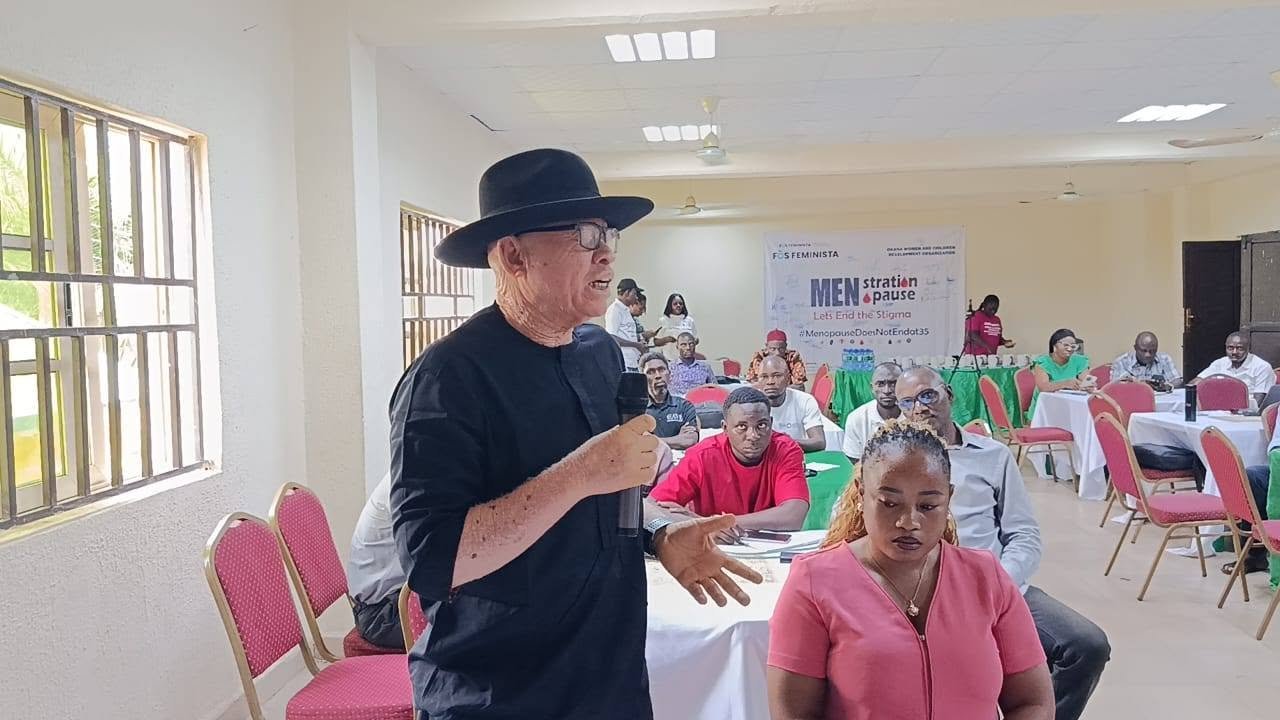
OAIDC participated as lead disability inclusion partner. As Lead OAIDC, I delivered the keynote address to frame the conversation around dignity, inclusion, and rights for all women and girls.
OBJECTIVES OF THE PROGRAM.
- Demystify myths and stigma around menstruation and menopause through community dialogue.
- Provide factual, culturally appropriate information on menstrual hygiene management, MHM, and menopausal health/wellness.
- Advocate for disability-inclusive MHM: accessible toilets, affordable sanitary products, and sign language interpretation for deaf girls/women.
- Mobilize community leaders, teachers, and health workers to become “Voices of Change” champions in their LGAs.
Keynote Address by OAIDC:
Topic: “Dignity in Every Cycle: Leaving No Woman or Girl Behind”
Focus: Rights of women/girls with disabilities to MHM information, products, and facilities. Shared lived experiences and policy gaps under Benue Disability Law 2025.
I urged community leaders to become “Voices of Change” by speaking up against period shame and ensuring women with disabilities are not excluded from health programs.
OUTCOMES & FEEDBACK.
- Knowledge Shift: Pre/post questions showed 78% of adolescent girls moved from “periods are dirty/curse” to “periods are normal biological process”.
CHALLENGES OBSERVED.
- Product Access: High cost of disposable pads. Many rural women rely on rags/newspapers due to poverty and displacement.
- WASH Infrastructure: Most schools/PHCs lack private, accessible toilets with water and disposal bins.
- Cultural Silence: Men and boys still absent from conversations. Some women felt shame speaking openly.
- Displacement: Guma participants from IDP camps lack consistent access to water, increasing infection risks.
RECOMMENDATIONS.
For sustainability, I recommend:
- School & PHC Upgrade: Partners/LGA should prioritize 1 accessible, girl-friendly toilet per school/PHC with disposal bins.
- Peer Educators: Train 20 girls and 10 women with disabilities as “Voices of Change Ambassadors” per LGA for continuous sensitization.
- Male Engagement: Run “Husbands & Fathers” sessions to reduce stigma and increase support at household level.
- Disability Inclusion Policy: All future health programs in Benue must budget for sign language, braille, and accessible venues per Disability Law 2025.
- Follow-up and Monitoring: OAIDC and partners to track 3 schools/PHCs for 6 months to assess toilet use and school attendance of girls.
CONCLUSION.
Voices of Change, proved that when communities talk openly, stigma reduces and dignity increases. OAIDC’s participation ensured women and girls with disabilities were seen, heard, and included from planning to delivery.
Menstrual and menopausal health is not “women’s problem” it’s a community health and education issue. With LGAs, CSOs, and leaders taking ownership, Benue can become a model for inclusive MHM.
